
Closed Circuit Reverse Osmosis (CCRO)


Closed Circuit Reverse Osmosis (CCRO) is DION+’s high-efficiency desalination solution designed to operate in synergy with our MCDI core technology. While MCDI provides energy-efficient and selective ion removal for moderate salinity applications, CCRO expands system capability to treat higher salinity feed water and complex industrial streams where pressure-driven membrane separation is required. At DION+, CCRO is strategically integrated with the MCDI core to create a flexible and performance-optimized treatment platform. In this configuration:
CCRO delivers high-recovery desalination and bulk salt reduction.
MCDI provides selective ion polishing, hardness control, or energy-optimized partial desalination.
This unique MCDI+CCRO integration allows DION+ to balance recovery rate, energy consumption, and operational stability, while adapting system configuration to specific industrial water chemistry and discharge requirements. By combining CCRO’s high-salinity handling capability with the electrochemical efficiency of MCDI, DION+ extends treatment performance across a broader salinity range — from brackish water to highly concentrated process streams — within a unified and optimized system architecture..
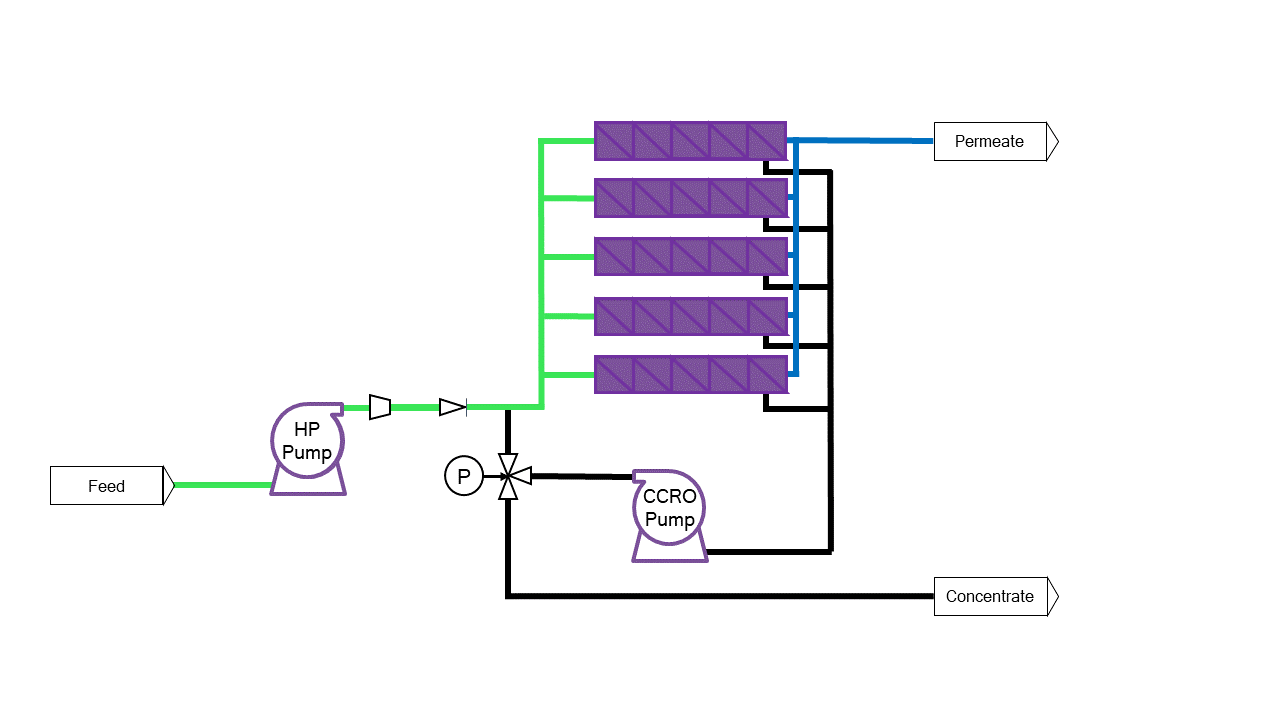
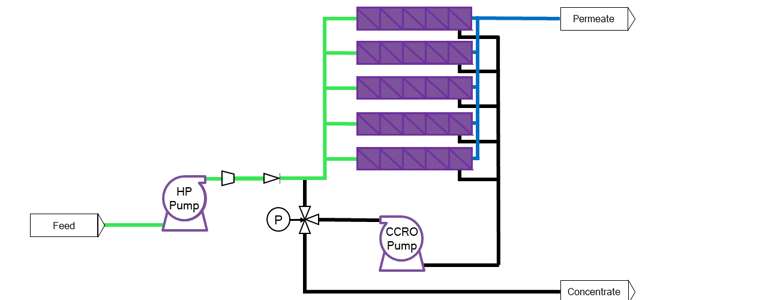
CCRO technology overview
Closed Circuit Reverse Osmosis (CCRO) is an advanced membrane desalination technology designed to achieve higher recovery rates, improved operational stability, and optimized energy consumption compared to conventional reverse osmosis (RO) systems. Unlike traditional RO, which operates in a continuous open-flow mode, CCRO works in a batch-based closed-loop configuration. The feedwater circulates within the membrane loop, gradually increasing in concentration while permeate (treated water) is continuously extracted. Once the target recovery is reached, the concentrated stream is discharged in a controlled manner and the cycle restarts.
Key Advantages of CCRO
High Water Recovery Rates: Achieves significantly higher recovery compared to conventional RO, reducing feedwater demand and minimizing brine discharge volume.
Reduced Scaling and Fouling Risk: Batch-mode operation with controlled concentration progression lowers the risk of membrane scaling and extends membrane service life.
Optimized Energy Consumption: Adaptive pressure control matches operating pressure to real-time salinity conditions, improving specific energy efficiency.
Compact and Modular Design: Well-suited for small and medium-scale installations with space constraints and scalable capacity requirements.
Operational Stability Under Variable Conditions
Handles fluctuating feedwater quality more effectively than conventional continuous-flow RO systems.Lower Lifecycle Cost (LCC): Improved membrane longevity, reduced chemical cleaning frequency, and higher recovery contribute to reduced long-term operating expenses.
CCRO Combination with MCDI technology
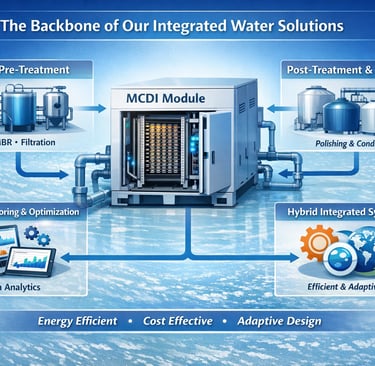
When integrated with the MCDI core platform, CCRO becomes part of a performance-optimized desalination dual-architecture. CCRO performs bulk salt reduction and high-recovery desalination, particularly for elevated salinity streams, while MCDI provides selective ion removal, hardness control, and energy-efficient polishing. This combination enables DION+ to design systems that balance recovery rate, energy consumption, and water quality targets with greater precision. By leveraging the strengths of both pressure-driven membrane separation (CCRO) and electrochemical ion removal (MCDI), the overall treatment platform achieves broader salinity coverage, improved operational flexibility, and optimized lifecycle performance.
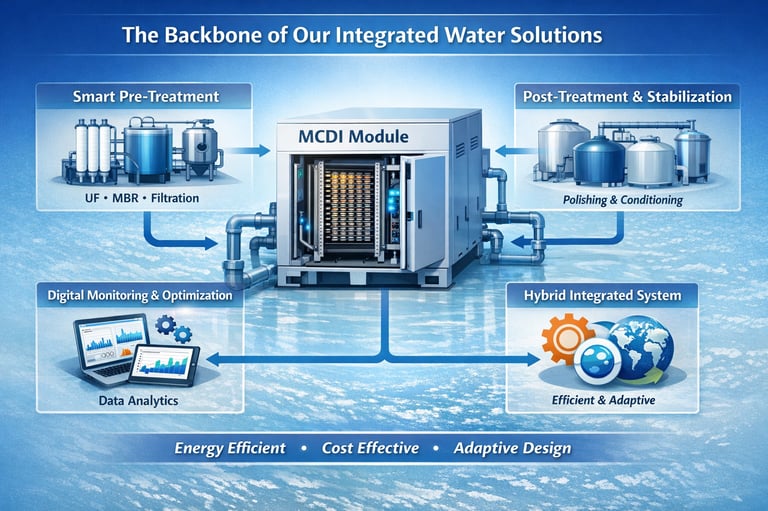
Application Areas of CCRO+MCDI Technology

Drinking Water Purification
Ideal for municipalities, rural systems, and point-of-use industrial supply
Removal of hardness (Ca²⁺, Mg²⁺)
Nitrate and fluoride reduction
Decentralized and modular drinking water systems
Energy-efficient alternative for low TDS water
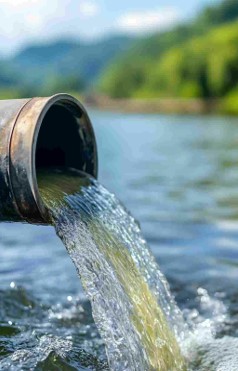
Industrial Wastewater Treatment & Reuse
Supports circular water management strategies and ESG compliance
Selective ion removal after biological treatment
Industrial process water recycling
Cooling tower blowdown treatment
Reduction of discharge salinity

Agricultural Water Management
Enables sustainable agriculture in water-stressed regions.
Salinity control for irrigation water
Selective removal of sodium and harmful ions
Nutrient management and recovery potential
Prevention of soil salinization
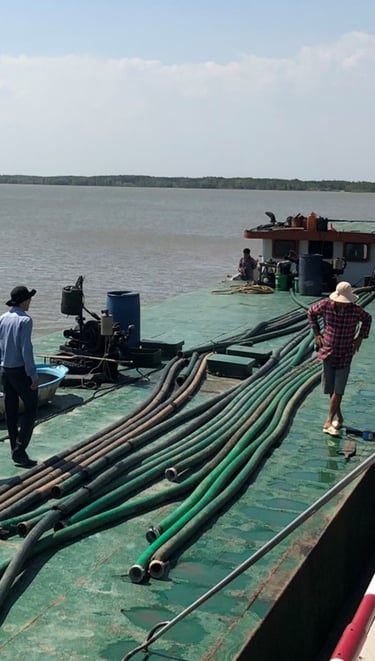
Desalination of Saline Water
Suitable for inland desalination and industrial brackish sources.
Efficient treatment of low to medium salinity water
Lower operating pressure than RO
Reduced scaling and fouling risk
Hybrid integration with CCRO for high salinity cases
Contact
Reach out for partnerships or inquiries.
Dion+
Next-generation desalination
© 2026. All rights reserved.
info@dionplus.com
Get updates on energy-efficient water solutions.